

Best Automated Trading Platform (2026): Finvtech & Top Software Compared
Buggy APIs. Broker connection errors. Backtests that look incredible on paper… and then collapse the moment real money hits the line.
If you’ve ever tried to build a trading bot on weak software, you know the frustration. Most traders just give up.
But those problems largely disappear when you use reliable, well-built automated trading platforms. The right software turns automation from a liability into an edge.
This guide breaks down the best automated trading platforms for 2026, starting with Finvtech, and evaluates each one on the factors that actually matter: data reliability, execution quality, backtesting accuracy, and broker compatibility.
How We Evaluate Automated Trading Platforms
Not all platforms are built equal. Before comparing options, here’s what separates the serious contenders from the rest:
Backtesting Reliability — Can you trust the results? Platforms that use tick-accurate historical data produce backtests that closely mirror live performance. Those relying on broker-sourced data often deliver misleading numbers that fall apart in real markets.
Execution Quality — Server-side execution (where your algorithm runs on the provider’s infrastructure) dramatically outperforms client-side setups. No local machine failures. No VPS crashes. No missed orders.
No-Code vs. Full-Code Flexibility — Beginners need visual builders. Advanced traders need scripting environments. The best platforms support both.
Regulatory Compliance — With SEBI’s algo framework now fully enforced in India, exchange-empanelled providers matter more than ever.
1. Finvtech — Automation With Compliance Built In
Finvtech positions itself as a practical entry point for Indian retail traders who want to automate without wrestling with infrastructure. The platform focuses on removing the technical barriers that keep most traders stuck in manual execution.
What Finvtech offers:
Broker-Native Execution — Rather than routing through third-party integrations, Finvtech operates within your broker’s environment. This reduces latency, minimizes connection errors, and keeps all automated orders within a regulated framework.
Backtesting Environment — Test strategies against historical market data before committing capital. The platform provides performance metrics including drawdown, win rate, and risk-reward ratios.
Risk Controls — Built-in stop-loss automation and position sizing tools help protect against adverse moves.
Compliance-First Design — Finvtech operates in alignment with NSE and SEBI guidelines for retail algorithmic trading, including order tagging and audit trail requirements.
Who it’s for: Retail traders who want to automate their strategies without technical complexity, and who value regulatory compliance as a non-negotiable feature.
Pricing: Subscription-based. Check the official Finvtech site for current plans.
2. ProRealTime — Server-Side Reliability and Deep Historical Data
No VPS required. No computer that needs to stay on 24/7.
Key strengths:
- Server-side execution eliminates local failure points
- ProBuilder proprietary language for custom strategy development
- No-code visual builder available for simpler strategies
- Tick-level historical data for accurate backtesting
- 95% backtesting reliability — among the highest in the industry
- Free tier for end-of-day data; real-time plans from Rs.1000/month
Traders who prioritize execution reliability and want the assurance that their algorithms run continuously without local infrastructure.
3. TradingView — Charting Powerhouse With Automation Limitations
TradingView dominate the charting and analysis space, and its Pine Script language has made backtesting accessible to a wide audience. But full automation isn’t its native strength.
Key strengths:
- Massive community and extensive indicator library
- Pine Script for strategy development and backtesting
- Broker compatibility across dozens of platforms
- Free tier available; paid plans from €14.95/month
Limitations:
- No built-in automation — requires third-party tools or webhooks to execute trades
- No native no-code strategy builder
- Tick data and additional alerts are paywalled
Traders who want analysis and backtesting in one ecosystem and are willing to bridge to automation through external tools.
4. MetaTrader (MT4/MT5) — The Industry Standard for EA Trading
MetaTrader remains the widely used platform for automated trading, largely due to its extensive broker network and mature of (EAs).
Key strengths:
- Free software — your broker covers the license
- MQL4/MQL5 for custom EA development
- Massive third-party ecosystem of pre-built EAs and indicators
- Wide broker compatibility across forex, CFDs, and more
Limitations:
- Client-side execution — requires VPS or always-on computer
- No no-code option — MQL knowledge required
- Backtesting reliability around 75% — lower than server-side alternatives
Who it’s for: Forex traders with coding ability who want access to a vast library of existing automation tools.
5. cTrader — Modern Execution With C# Automation
cTrader, built by Spotware, offers server-side execution through cTrader Cloud and a cleaner, more modern interface than MetaTrader. The tradeoff: fewer brokers support it.
Key strengths:
- Server-side execution via cTrader Cloud — no VPS needed
- C# for cBot development — industry-standard language
- Clean, modern interface
- Free platform — broker covers licensing
Limitations:
- C# only — no no-code option
- Smaller broker selection compared to MetaTrader
- Broker-sourced data for backtesting (not exchange tick data)
6. NinjaTrader — Futures-Focused Customization
NinjaTrader has been a fixture in futures trading since 2003. It offers both no-code Strategy Builder and NinjaScript (C#-based) for advanced automation.
Key strengths:
- Free charting and backtesting
- Strategy Builder for no-code users
- NinjaScript (C#) for full customization
- Market Replay — tick-by-tick historical session replay
- CySEC regulated in Europe
Limitations:
- Futures only — no forex or equities
- Client-side execution — requires running machine or VPS
- Desktop UI feels dated compared to modern alternatives
Who it’s for: Futures traders who want deep customization and can accept the infrastructure requirements.
7. QuantConnect — Cloud-Native Algorithmic Trading
QuantConnect is a fully cloud-based platform supporting Python and C#. It’s designed for traders who want institutional-grade infrastructure without managing servers.
Key strengths:
- Cloud-based — no local machine required
- Python and C# support
- Extensive built-in data across stocks, futures, and crypto
- Realistic backtesting with slippage and transaction cost modeling
- 95% backtesting reliability
- Free tier for backtesting; live trading from $60/month
Limitations:
- Steeper learning curve — requires coding knowledge
- Cloud environment — less control over exact setup
- No no-code option
Coders who want professional-grade infrastructure and don’t mind the learning investment.
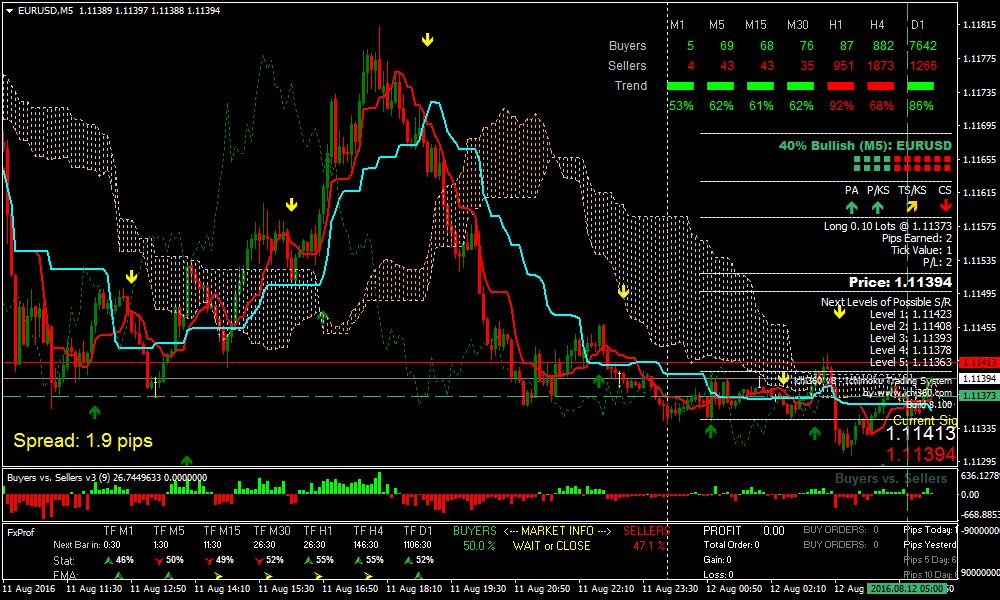
Platform Comparison: Key Metrics at a Glance
Platform | Execution Type | No-Code? | Backtesting Reliability | Pricing |
Finvtech | Broker-native | Yes | Historical data testing | Subscription |
ProRealTime | Server-side | Yes | 95% | Free / €24/mo |
TradingView | Client-side | No | 90% | Free / €14.95/mo |
MetaTrader | Client-side | No | 75% | Free |
cTrader | Server-side | No | 80% | Free |
NinjaTrader | Client-side | Yes | 85% | Free + commissions |
QuantConnect | Cloud | No | 95% | Free / $60/mo |
Common Mistakes When Choosing an Automated Trading Platform
These come up repeatedly, and each one costs money:
Choosing automation without validating the strategy first. A backtest that looks great on imperfect data is worse than no backtest at all — it creates false confidence.
Ignoring regulatory compliance. In India, SEBI’s algo framework now requires exchange-empanelled providers, order tagging, and audit trails. Unregistered platforms put your capital at unnecessary risk.
Overlooking execution infrastructure. Client-side platforms depend on your machine staying online. If your internet drops during a critical moment, your bot stops — and your orders don’t execute.
Underestimating slippage and fees. Many backtests assume perfect fills at exact prices. Real markets don’t work that way. Platforms that model slippage produce more honest results.
Selecting on price alone. The cheapest platform isn’t cheap if it costs you a bad fill on a large position.
Which Automated Trading Platform Is Right for You??
The answer depends entirely on your workflow.
If you’re in India and want compliance-first automation without coding — Finvtech is built for exactly that. Broker-native execution, no-code deployment, and regulatory alignment make it a practical starting point.
If you want server-side reliability and deep backtesting — ProRealTime or QuantConnect are the strongest options.
If you’re a forex trader with coding skills — MetaTrader or cTrader offer mature ecosystems.
If you’re a futures trader who wants customization — NinjaTrader delivers.
If you want charting and analysis first, automation later — TradingView remains unmatched for analysis, with bridges to execution when you’re ready.
Final Thoughts
Automated trading removes emotion from execution, but it doesn’t remove the need for a genuine edge. A bad strategy loses money just as fast on autopilot — sometimes faster.
The platform you choose determines how reliably your edge gets executed. Data quality, execution infrastructure, and regulatory compliance aren’t features to compare on a spec sheet. They’re the foundation that determines whether your automation works in live markets or just looks good in backtests.
Start with paper trading. Test rigorously. Deploy small. The platform is the tool — the outcome depends on what you build with it.
Disclaimer: This Blog is for educational purposes only and does not constitute financial advice, investment recommendations, or performance rankings. Automated trading involves significant risk, including the potential loss of capital. Readers should perform their own due diligence before using any trading platform or strategy, including verifying regulatory registrations and testing with demo accounts. Past performance does not guarantee future results.